
How many total trophies does Real Madrid have? The legacy that make Los Blancos club of the century
There are institutions in football that represent success, and then there is Real Madrid, a club whose history is built on turning the biggest stages into familiar territory. From the early days of Spanish football to the modern era of global competition, Real Madrid has consistently remained at the center of the sport’s most important moments.
This article by livescore808 goes far beyond counting trophies. It reconstructs the story behind them, tracing how Real Madrid built a culture where winning is not an ambition, but an expectation. Each title belongs to a wider narrative, shaped by iconic players, defining matches, and eras that redefined football itself.
What separates Real Madrid from almost every other club is the continuity of excellence. While rivals rise and fall, Madrid has maintained its place at the top across decades. Their dominance is not confined to one generation, it is a pattern repeated over time, especially in Europe, where their identity is strongest.
How many total trophies does Real Madrid have?
Till the end of 2024/25 season, Real Madrid has won a total of 133 official trophies across all competitions, including domestic, continental, worldwide, and regional titles.
Breaking that down in detail: 71 domestic trophies (including La Liga, Copa del Rey, Supercopa de Espana), 25 continental trophies (including European Cup/ Champions League, UEFA Cup, UEFA Super Cup), 10 worldwide competition trophies (including FIFA Club World Cup, Intercontinental Cup...) and 27 regional trophies in the early history.
This total places Real Madrid among the most decorated clubs in football history, but what makes it exceptional is not just the volume. It is the level at which those trophies were won, particularly in Europe, where they stand alone.
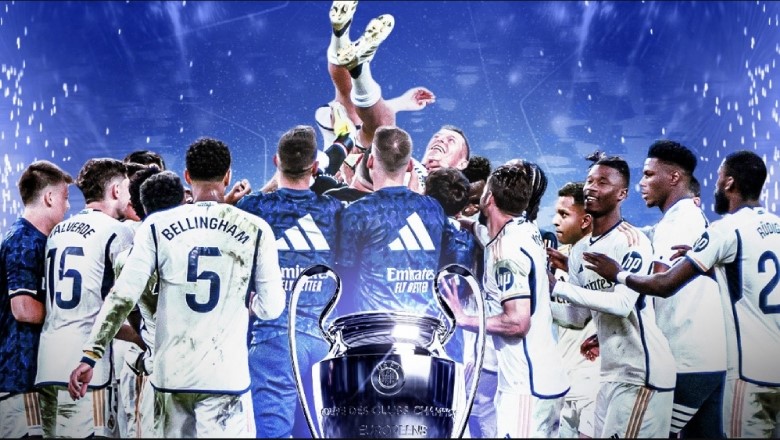
Domestic dominance: La Liga as a constant standard
At the heart of Real Madrid’s domestic success lies their record 36 La Liga titles, the highest in Spanish football history. This dominance stretches across generations, from the early dominance of the 1950s to modern title races defined by tactical sophistication and squad depth.
One of the most impressive campaigns came in the 2011/12 season under Jose Mourinho. That team reached 100 points, scored 121 goals, and set a new benchmark for attacking football in Spain. Cristiano Ronaldo’s goals were central, but the structure of the team allowed Madrid to overwhelm opponents week after week.
Another defining league triumph came in 2016/17 under Zinedine Zidane. Unlike previous teams, this side was built on depth and rotation, maintaining performance levels across multiple competitions. It was a demonstration of control, where consistency over an entire season became the deciding factor.
Compared to Barcelona, their greatest rival, Real Madrid’s league history is part of a constant battle for supremacy. While Barcelona has dominated certain eras, Madrid has matched that success over a longer timeline, maintaining a balance between domestic and European focus.
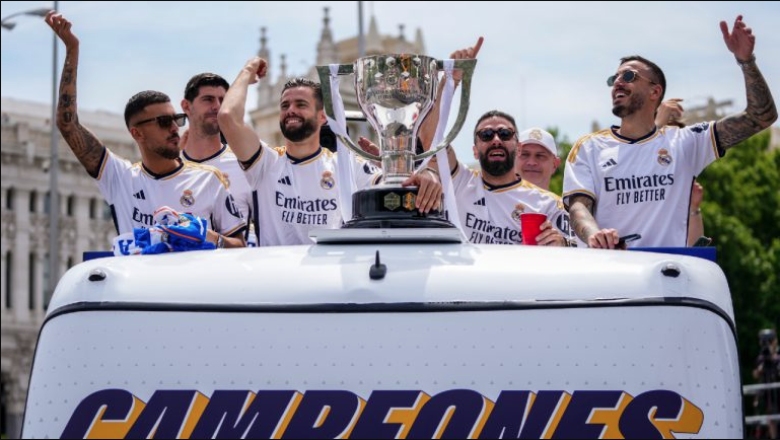
Champions League: a legacy beyond comparison
No competition defines Real Madrid more than the Champions League. With 15 titles, they are not just the most successful club in its history, they are the standard by which success is measured.
The foundation was built in the 1950s, when they won the first five European Cups consecutively. That era established a culture of dominance that would carry forward into modern football.
Decades later, the pursuit of the tenth title, known as “La Decima”, became symbolic. In 2014, against Atletico Madrid, Real Madrid were seconds away from defeat before Sergio Ramos scored a header in stoppage time. The match shifted instantly, and Madrid went on to win 4-1 in extra time. That goal did not just win a trophy, it released years of pressure and reinforced their identity in Europe.
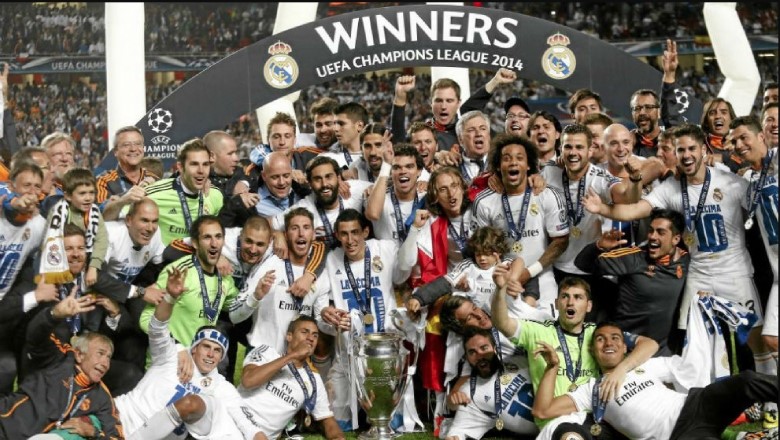
Then came an era that redefined modern football. Between 2015/16 and 2017/18, Real Madrid won three consecutive Champions League titles, something no club had achieved in the Champions League era. The 2016 final against Atletico Madrid went to penalties, showcasing resilience under pressure. The 2017 final against Juventus ended in a dominant 4-1 victory, highlighting tactical superiority. In 2018, against Liverpool, decisive moments once again defined the outcome, proving that Madrid’s connection to the competition was something deeper than form.
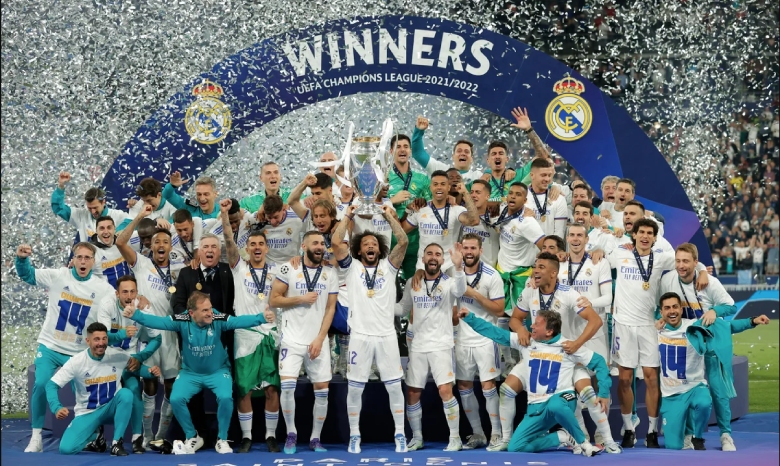
Even in 2021/22, their journey reinforced the same pattern. Against PSG, Benzema’s hat-trick turned the tie. Against Chelsea, resilience carried them through extra time. Against Manchester City, two late goals changed everything in seconds. And finally a single goal by Vinicius Jr. into Liverpool net sealed the most tremendous Europe champion in Los Blancos' history.
Copa del Rey and domestic cups: depth of success
Real Madrid’s 20 Copa del Rey titles highlight their ability to succeed in knockout competitions, where a single moment can define an entire campaign. These victories span decades, reflecting consistency across different footballing eras.
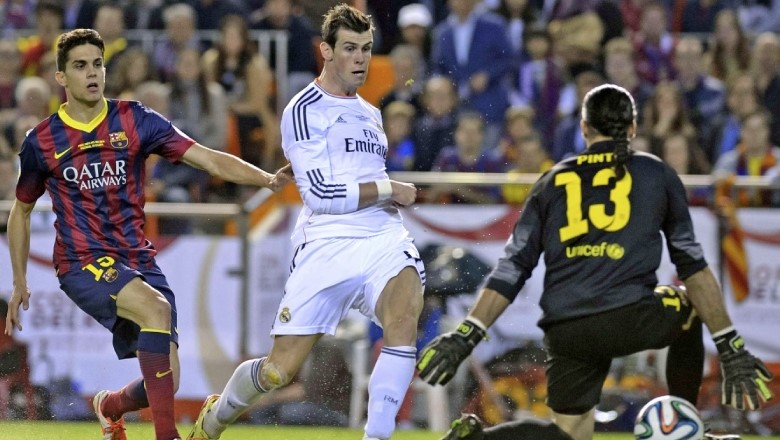
One of the most memorable finals came in 2014 against Barcelona. Gareth Bale’s iconic run down the wing, accelerating past Marc Bartra before scoring, became one of the most famous goals in the club’s history. It was a moment that captured both individual brilliance and the intensity of the rivalry.
Their 13 Spanish Super Cups further demonstrate their regular presence at the top level, often facing Barcelona in high-stakes matches. These encounters are not just about trophies, but about dominance within Spain, reinforcing their status as one of the country’s most powerful institutions.
Global dominance: turning European success into world recognition
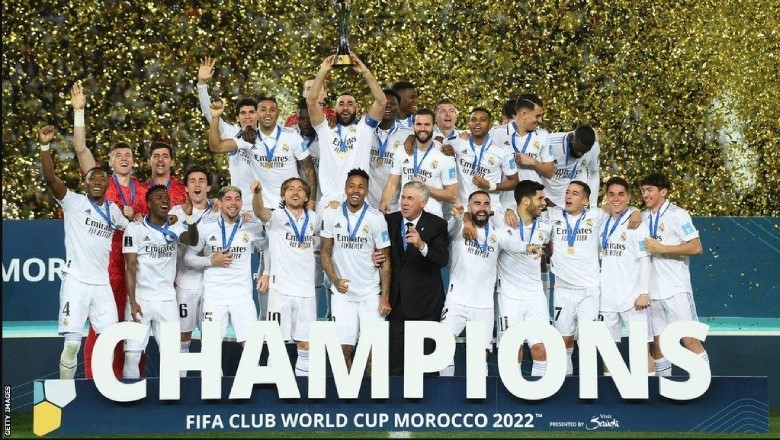
Real Madrid’s influence extends beyond Europe. With 5 FIFA Club World Cups and 3 Intercontinental Cups, they have consistently proven their strength on the global stage.
Their Club World Cup victories, particularly between 2014 and 2018, came during a period where they dominated both Europe and the world. These tournaments brought together champions from every continent, yet Madrid repeatedly imposed their style and quality.
The ability to translate European success into global dominance is a defining feature. It shows not only tactical strength, but also adaptability, facing different styles and still emerging as the strongest team.
Era-defining seasons: when Real Madrid reached another level
There are seasons where Real Madrid simply win trophies, and then there are seasons where they impose themselves so completely that the league, the rhythm of competition, and even their rivals begin to revolve around them.
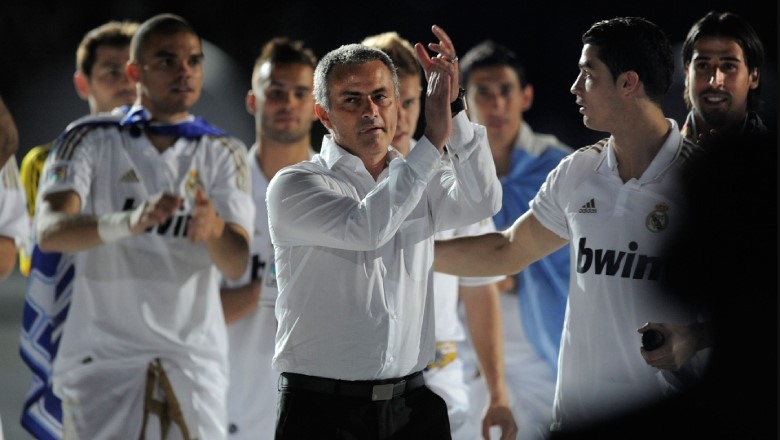
The 2011/12 campaign under Jose Mourinho remains one of the most dominant league seasons in football history. Real Madrid finished with 100 points, scoring 121 goals and breaking Barcelona’s control of Spanish football at the time. What made that season special was not just the numbers, but the way they dismantled opponents. Cristiano Ronaldo led the charge with 46 league goals, but the team as a whole functioned with ruthless efficiency. One of the defining moments came at Camp Nou, where Madrid defeated Barcelona 2-1, with Ronaldo’s late goal sealing a title that had been built on relentless attacking football and tactical discipline.
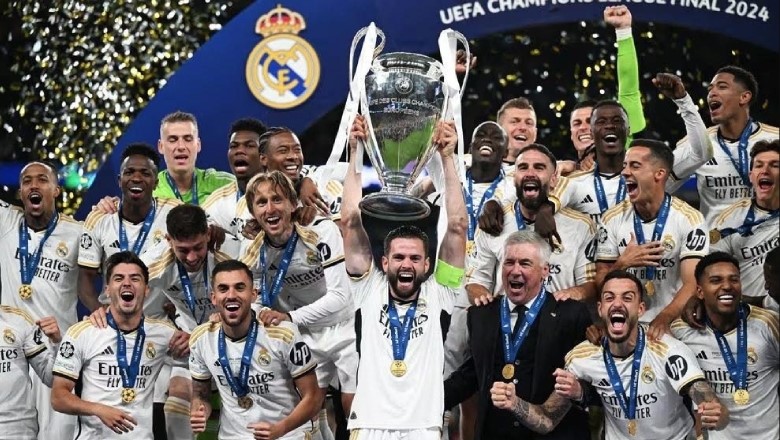
Years later, the 2023/24 season under Carlo Ancelotti offered a different kind of dominance. This was not about overwhelming opponents with sheer numbers, but about control, maturity, and adaptability. Real Madrid navigated injuries and squad transitions while maintaining consistency across competitions. In La Liga, they combined defensive solidity with clinical finishing, securing the title with authority.
But it was in the Champions League where that season truly came alive. Against Bayern Munich in the semifinal second leg, Real Madrid once again found a way when the margin was at its thinnest. Trailing late in the match, they turned the game around in the closing minutes, showing the same pattern that has defined their European identity for decades.
The final against Borussia Dortmund reflected that same control. Real Madrid absorbed pressure, waited for the right moments, and then struck with precision to secure another European title. It was not chaos, it was calculated dominance.
Real Madrid total trophies over history:
133 titles, including:
La Liga: 36 titles (1931/32, 1932/33, 1953/54, 1954/55, 1956/57, 1957/58, 1960/61, 1961/62, 1962/63, 1963/64, 1964/65, 1966/67, 1967/68, 1968/69, 1971/72, 1974/75, 1975/76, 1977/78, 1978/79, 1979/80, 1985/86, 1986/87, 1987/88, 1988/89, 1989/90, 1994/95, 1996/97, 2000/01, 2002/03, 2006/07, 2007/08, 2011/12, 2016/17, 2019/20, 2021/22, 2023/24)
Copa del Rey: 20 titles (1905, 1906, 1907, 1908, 1917, 1934, 1936, 1946, 1947, 1961/62, 1969/70, 1973/74, 1974/75, 1979/80, 1981/82, 1988/89, 1992/93, 2010/11, 2013/14, 2022/23)
Copa de la Liga: 1 title (1985)
Supercopa de España: 13 titles (1988, 1989, 1990, 1993, 1997, 2001, 2003, 2008, 2012, 2017, 2020, 2022, 2024)
Copa Eva Duarte: 1 title (1947)
European Cup/UEFA Champions League: 15 titles (1955/56, 1956/57, 1957/58, 1958/59, 1959/60, 1965/66, 1997/98, 1999/2000, 2001/02, 2013/14, 2015/16, 2016/17, 2017/18, 2021/22, 2023/24)
UEFA Cup/UEFA Europa League: 2 titles (1984/85, 1985/86)
UEFA Super Cup: 6 titles (2002, 2014, 2016, 2017, 2022, 2024)
Latin Cup: 2 titles (1955, 1957)
FIFA Club World Cup: 5 titles (2014, 2016, 2017, 2018, 2022)
Intercontinental Cup: 3 titles (1960, 1998, 2002)
FIFA Intercontinental Cup: 1 title (2024)
Ibero-American Cup: 1 title (1994)
Campeonato Regional Centro: 23 titles
Copa Federación Centro: 4 titles
Looking at how many total trophies does Real Madrid have, the number 133 reflects more than just success, it represents a club that has turned winning into tradition. Across domestic leagues, European nights, and global competitions, their identity remains consistent, to rise in the biggest moments and deliver when it matters most.
Within the context of football predictions, Real Madrid stands as a constant reference point. Form may fluctuate, squads may change, but the pattern remains. When the stakes are highest, they find a way. That is not just history, it is expectation, built over decades of dominance and reinforced by moments that continue to define the game.
For fans who want to dive deeper into football predictions, track football odds, and stay updated with football news and football results across every major competition, visit livescore808.mobi to experience a complete football platform built for real-time insights and global coverage.
The Most Popular
-
 How many months in a La Liga season? Inside the intense annual calendar of Spanish giants
 -
 Australia football team kit history: How the Socceroos changed their look over the decades?
 -
 5 France biggest losses in football history: Three of them came from an arch-rival
 -
 All Messi records that you need to know: The whole world El Pulga had conquered!
 -
 Top 17 players who played for both Chelsea and Arsenal: No.1 signing triggered a bitter lawsuit between two London clubs
 -
 What position does Neymar play? “Little Pelé” and the playing style behind a legend
 -
 Belgium national football team players World Cup 2026: 10 Red Devil stars ready to steal the show this summer
 -
 Why did Makelele leave Real Madrid? Zidane’s warning and the dawn of the first Galacticos downfall
 -
 How much did Real Madrid pay for Beckham? Blockbuster signing with influence far beyond football
 -
 How much did Man City pay for Jack Grealish? The journey from England’s most expensive player to a forgettable flop