
How many times has Dortmund won the Bundesliga? Inside Die Borussen’s Bundesliga journeys
In the ever-competitive landscape of German football, few clubs embody passion and identity quite like Borussia Dortmund. Known for their electrifying supporters and fearless attacking style, Dortmund has consistently challenged the traditional power structure of the Bundesliga.
Across different eras, the club has produced iconic squads capable of disrupting dominance and rewriting narratives. Whether through tactical innovation or the emergence of world-class talents, Dortmund’s journey has never been predictable, yet always compelling to follow.
For fans seeking a deeper understanding of that legacy, this article from livescore808 will break down the exact answer while revisiting the most defining Bundesliga triumphs that shaped Borussia Dortmund’s identity.
How many times has Dortmund won the Bundesliga?
All over the 117-year history of Die Borussen till the present, they won eight national title in total, including three in the pre-Bundesliga era and five after the tournament was found in 1963. Dortmund’s league triumphs span multiple generations, reflecting both periods of dominance and moments of resurgence. While they have not matched the overwhelming consistency of Bayern Munich, Dortmund has repeatedly proven capable of rising to the top, often during fiercely contested seasons.
Their titles have come in distinct eras, from early domestic breakthroughs to modern tactical revolutions that redefined German football.
Early foundations and pre-Bundesliga success
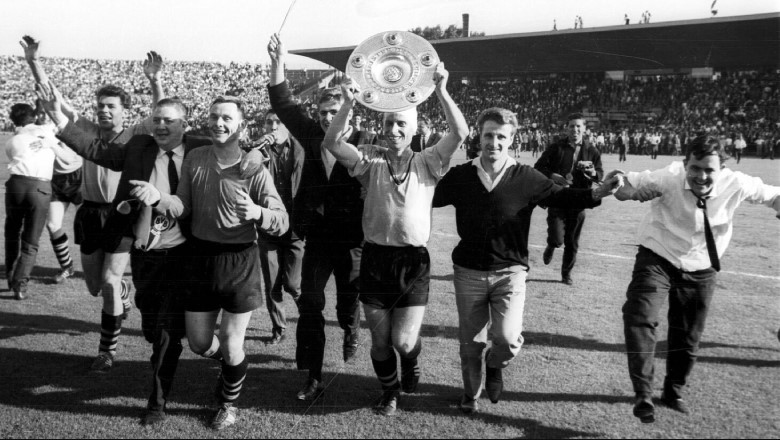
Before the Bundesliga was officially established in 1963, Borussia Dortmund had already begun building its reputation as a competitive force in German football. Their titles in 1956 and 1957 showcased a team capable of sustained success, combining physical strength with tactical discipline.
The 1963 championship, coming just before the Bundesliga era began, marked the end of one chapter and the beginning of another. These early triumphs played a crucial role in shaping Dortmund’s identity, proving that the club could compete with the best teams in the country even before the modern league structure was introduced.
The modern breakthrough: 1994/95
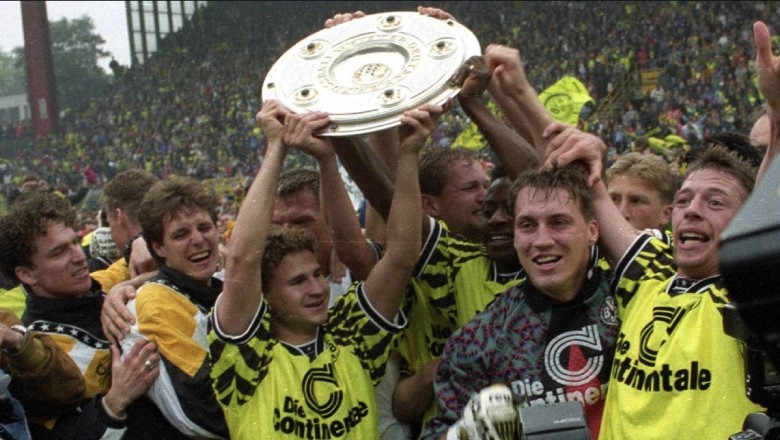
After decades without a league title, Dortmund returned to the top during the 1994/95 season under the guidance of Ottmar Hitzfeld. This victory represented more than just a championship, it signaled the club’s return to elite status in German football.
The team relied on a balanced tactical approach, combining defensive solidity with efficient attacking play. Dortmund’s consistency throughout the campaign allowed them to edge past strong competitors and reclaim the Bundesliga crown.
This triumph laid the groundwork for a new era of success and reestablished the club as a serious contender both domestically and in Europe.
Back-to-back dominance: 1995/96
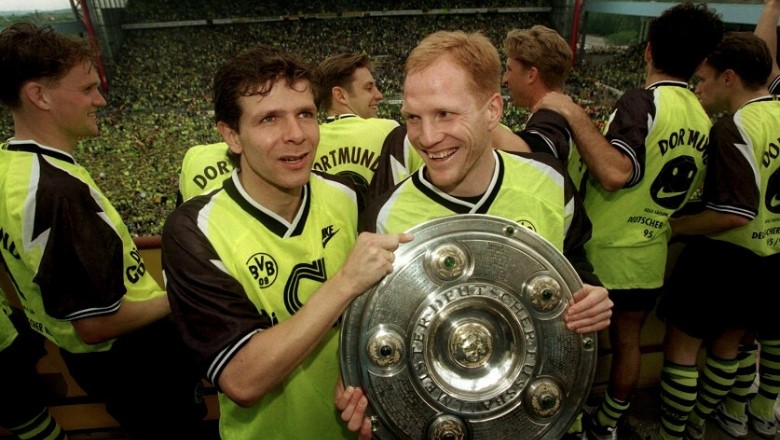
Dortmund quickly confirmed their resurgence by winning the Bundesliga again in the 1995/96 season. Retaining the title required not only quality but also mental strength, as expectations had dramatically increased following their previous success.
Led by influential figures such as Matthias Sammer, the team demonstrated maturity and tactical intelligence. Their ability to control matches and adapt to different opponents made them one of the most complete sides in Europe at the time.
This period of back-to-back titles solidified Dortmund’s position among Germany’s elite and paved the way for their Champions League triumph in 1996/97.
The Klopp era and tactical revolution: 2010/11 and 2011/12
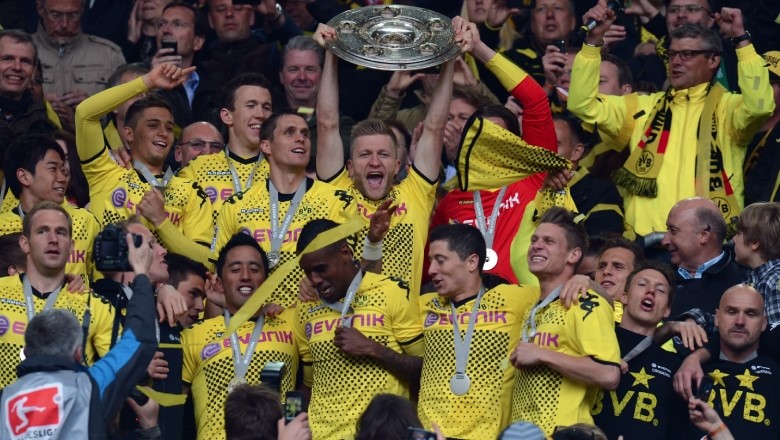
One of the most defining periods in Dortmund’s history came under Jurgen Klopp. Die Borussen returned to domestic triumph in the 2010/11 season, with a seven-point gap between them and the runners-up Leverkusen.
One year after, the 2011/12 season, in particular, stands out as a masterpiece of modern football.
Klopp introduced a high-intensity pressing system that overwhelmed opponents and redefined how the Bundesliga was played. Dortmund finished the season with a then-record 81 points, dominating the league with speed, energy, and tactical cohesion.
Players such as Robert Lewandowski, Marco Reus, and Mats Hummels became central figures in a team that blended youth with precision. The campaign ended not only with the Bundesliga title but also with a domestic double, marking one of the most successful seasons in the club’s history.
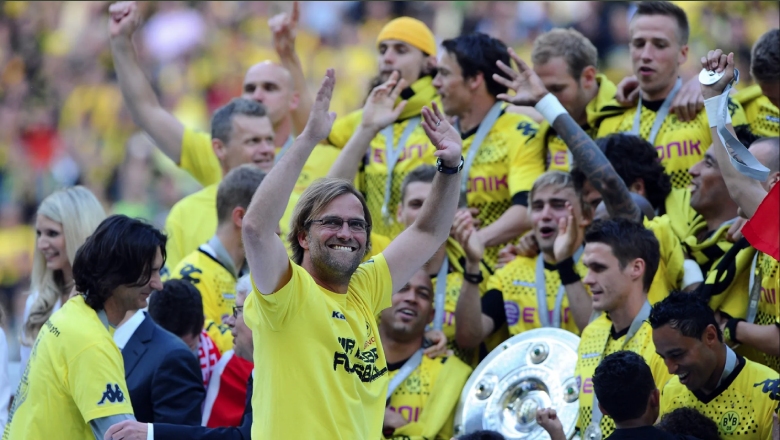
Borussia Dortmund’s Bundesliga hall of fame:
Champions (8): 1956, 1957, 1963, 1994/95, 1995/96, 2001/02, 2010/11, 2011/12.
Runners-up (11): 1949, 1961, 1965/66, 1991/92, 2012/13, 2013/14, 2015/16, 2018/19, 2019/20, 2021/22, 2022/23.
Borussia Dortmund’s eight Bundesliga titles tell a story that goes beyond numbers. Each triumph reflects a different era, a different philosophy, and a different group of players who rose to the occasion.
Unlike clubs that rely solely on sustained dominance, Dortmund’s legacy is built on moments of resurgence and brilliance. They are a club that thrives on challenging the established order, often pushing the boundaries of tactical innovation and player development.
Their influence extends beyond trophies, shaping the identity of German football through attacking play, youth development, and one of the most passionate fan cultures in the world.
For those who want to go beyond historical milestones and explore the game through a more analytical lens, livescore808.mobi offers a comprehensive football experience. From real-time match insights to advanced football predictions, the platform delivers in-depth coverage designed for fans who value both data and storytelling. Whether you are tracking Bundesliga contenders or exploring European competitions, it provides a smarter way to stay connected with the world of football.
The Most Popular
-
 How many months in a La Liga season? Inside the intense annual calendar of Spanish giants
 -
 Australia football team kit history: How the Socceroos changed their look over the decades?
 -
 5 France biggest losses in football history: Three of them came from an arch-rival
 -
 All Messi records that you need to know: The whole world El Pulga had conquered!
 -
 Top 17 players who played for both Chelsea and Arsenal: No.1 signing triggered a bitter lawsuit between two London clubs
 -
 What position does Neymar play? “Little Pelé” and the playing style behind a legend
 -
 Belgium national football team players World Cup 2026: 10 Red Devil stars ready to steal the show this summer
 -
 Why did Makelele leave Real Madrid? Zidane’s warning and the dawn of the first Galacticos downfall
 -
 How much did Real Madrid pay for Beckham? Blockbuster signing with influence far beyond football
 -
 How much did Man City pay for Jack Grealish? The journey from England’s most expensive player to a forgettable flop