
Why do football players kneel before a game? Taking a stand against the horrors of discrimination in football
While stadiums are usually filled with the roar of thousands, there are brief seconds before the whistle where silence speaks louder than any chant. Taking the knee has evolved from a lone protest in the United States into a global phenomenon within association football, serving as a visceral reminder of the systemic inequalities that still plague the pitch. However, as the seasons pass, the meaning behind the movement has faced intense scrutiny from fans, politicians, and players alike.
Livescore808 will delve into the evolution of this symbolic act, tracing its journey from a courageous stand for civil rights to its current status as a debated pre-match ritual. Understanding why do football players kneel before a game requires looking beyond the grass to the social movements that have forced football to confront its own uncomfortable truths about race and representation.
Why do football players kneel before a game?
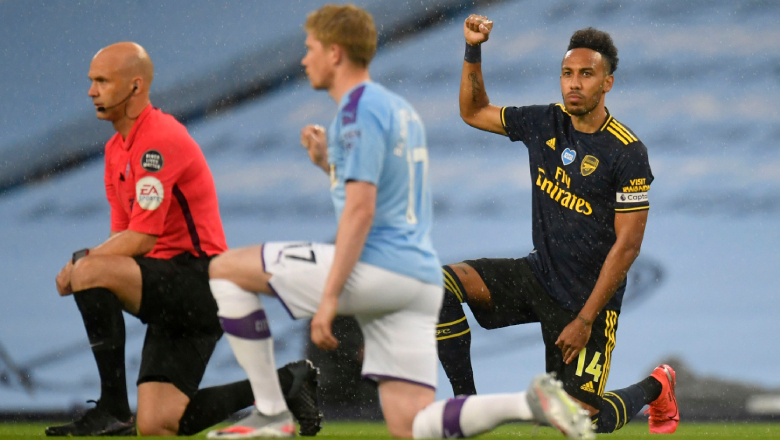
The gesture of "taking a knee" in football is a symbolic protest against racial injustice and police brutality, originally popularized by NFL quarterback Colin Kaepernick in 2016. In the world of association football, the practice became a standard pre-match fixture following the "Project Restart" in 2020, as a show of solidarity with the Black Lives Matter movement after the murder of George Floyd. By kneeling, players aim to keep the conversation about racial equality alive and to put pressure on governing bodies to take concrete actions against discrimination in the stands and online.
Beside that, during the 2022 World Cup in Qatar, the England national team made the collective decision to continue taking the knee before their matches to represent a unified stance on a global stage. Manager Gareth Southgate emphasized that the gesture was intended to demonstrate solidarity and inclusivity to a worldwide audience, particularly in a tournament surrounded by significant human rights discussions.
The global spread and the "whole-game" commitment
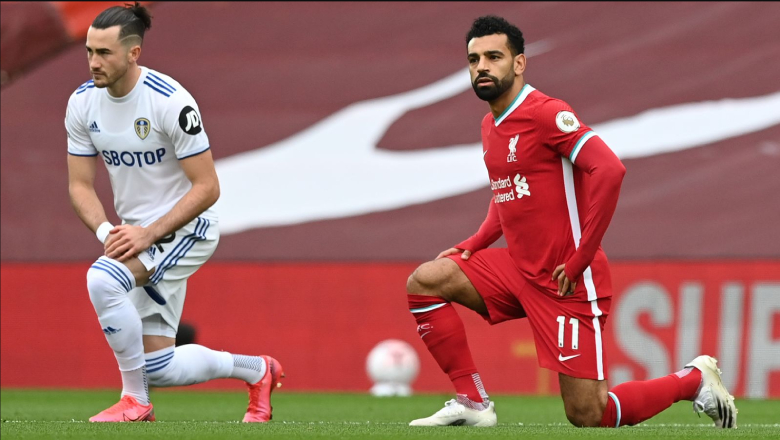
What began as a protest in American football quickly crossed the Atlantic, finding a permanent home in the English Premier League and various international competitions. Footballing authorities officially sanctioned the gesture as a peaceful way for athletes to use their platforms for social change.
For several seasons, every game began with this visual pledge, signaling a collective commitment from the IFAB, FIFA, and national FAs to combat racism. However, the uniformity of the gesture also sparked debates about whether it was becoming a "performative" act, a routine that looked good on camera but lacked the tangible policy changes needed to protect players from abuse.
However, starting from the 2022/23 season, the Premier League officially limited the pre-match kneeling ritual to specific high-profile match weeks and cup finals rather than every game. This shift occurred after captains and key players reached a consensus that the constant repetition had diluted the gesture's impact, leading them to believe that more targeted use would better amplify the message of anti-discrimination.
Resistance and refusal: Why some stars chose to stand tall?
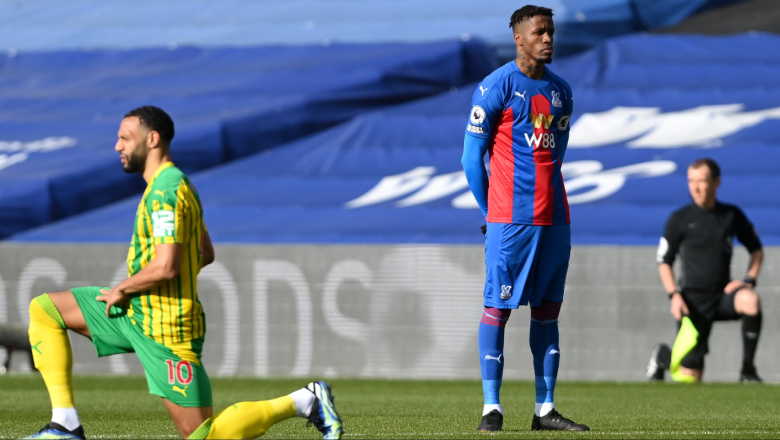
As the gesture became routine, several prominent figures began to question its effectiveness, leading to high-profile refusals. Wilfried Zaha became the first Premier League player to stop taking the knee in early 2021, stating that the act had become "degrading" and merely a part of the "pre-match routine" that didn't stop the abuse he received. Zaha argued that instead of kneeling, society needs better education and social media companies must take actual responsibility. He famously declared he would "stand tall" to show that being Black is a blessing.
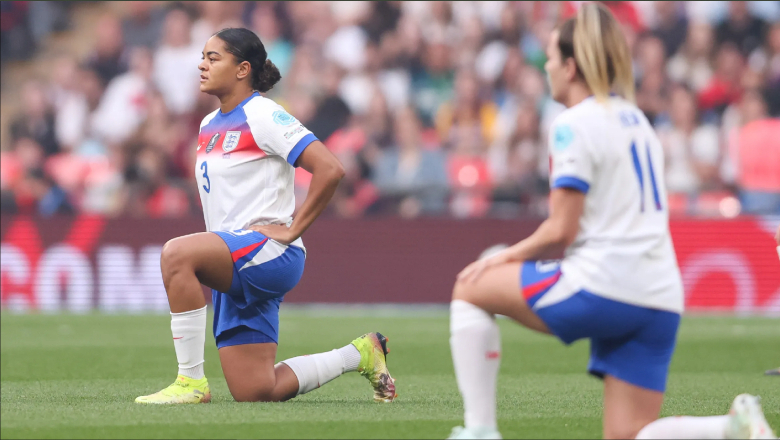
In the women's game, the England Lionesses also made headlines by abandoning the gesture during Euro 2025. This decision was a direct response to the horrific racist abuse directed at defender Jess Carter. Midfielder Georgia Stanway explained the team's shift in stance, emphasizing that "not taking the knee is about putting another statement out there." Stanway poignantly noted that supporting Carter had strengthened their bond, but they felt the knee had lost its impact. The collective decision to stand was intended to highlight that the current system was failing to protect players like Carter and that "more needs to be done" beyond symbolic gestures.
The debate over why do football players kneel before a game has shifted from its original meaning to a discussion about the necessity of real-world action. While taking the knee remains a profound symbol of unity for many, the refusal by stars like Zaha and the Lionesses reminds us that symbols alone cannot erase prejudice. As the sport moves forward, the focus is increasingly shifting from the seconds before the whistle to the actions taken by authorities in the weeks and months that follow.
For those looking to gain a competitive edge in their game analysis, livescore808.mobi provides the most detailed football predictions and statistical breakdowns available. Our experts analyze every factor, from team morale to tactical shifts, to ensure you are always one step ahead of the results. Stay tuned to our platform for daily insights and the most accurate match forecasts in the industry.
The Most Popular
-
 How many months in a La Liga season? Inside the intense annual calendar of Spanish giants
 -
 Australia football team kit history: How the Socceroos changed their look over the decades?
 -
 5 France biggest losses in football history: Three of them came from an arch-rival
 -
 All Messi records that you need to know: The whole world El Pulga had conquered!
 -
 Top 17 players who played for both Chelsea and Arsenal: No.1 signing triggered a bitter lawsuit between two London clubs
 -
 What position does Neymar play? “Little Pelé” and the playing style behind a legend
 -
 Belgium national football team players World Cup 2026: 10 Red Devil stars ready to steal the show this summer
 -
 Why did Makelele leave Real Madrid? Zidane’s warning and the dawn of the first Galacticos downfall
 -
 How much did Real Madrid pay for Beckham? Blockbuster signing with influence far beyond football
 -
 How much did Man City pay for Jack Grealish? The journey from England’s most expensive player to a forgettable flop